The Silk Road: How Ancient Trade Routes Shaped the Modern World
The Enduring Legacy of the Silk Road: A Vital Bridge Connecting East and West Through Global Trade
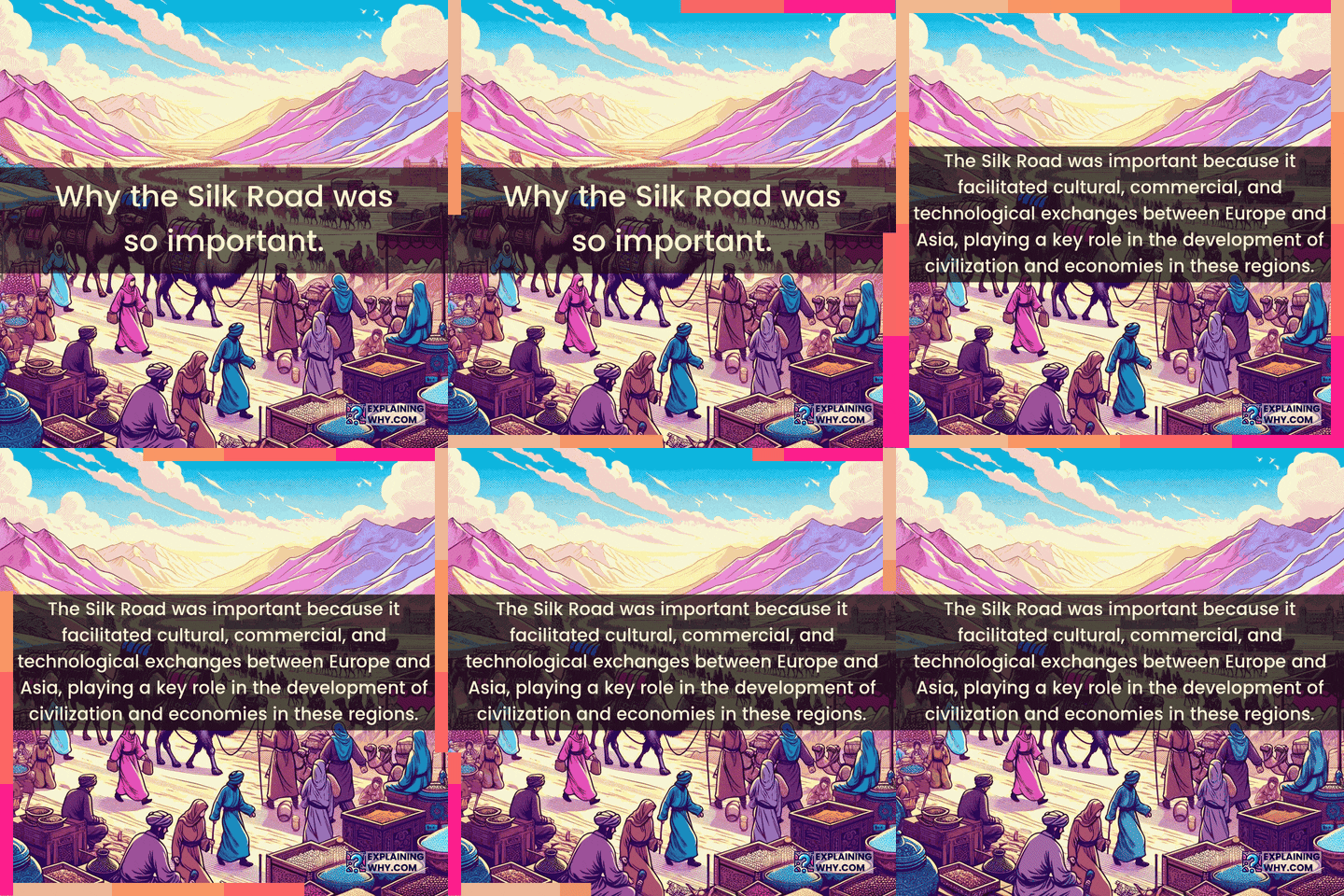
Unveiling the Ancient Silk Road: A Pathway to Global Connection

For over two millennia, the Silk Road stood as more than just a series of routes; it was a vast, interconnected network of trade pathways stretching over 4,000 miles. This incredible system linked East Asia with the Mediterranean, serving as a primary channel for ancient worlds' trade. Beyond being a mere conduit for silk—its most famous commodity—the Silk Road was a dynamic force that facilitated profound exchanges of goods, innovative technologies, diverse religions, and transformative ideas. These interactions significantly shaped the civilizations it connected, leaving a lasting historical impact. This article delves into the origins, golden age, eventual decline, and modern revival of this monumental network, highlighting its enduring legacy on global history and economic connections.
The Genesis and Evolution of the Silk Road: Ancient Trade Routes Flourish (2nd Century BCE – 14th Century CE)

The foundations of the Silk Road were established during the powerful Han Dynasty (207 BCE – 220 CE) in China. It began when Emperor Wu of Han dispatched the diplomat Zhang Qian on crucial missions to forge alliances against the Xiongnu, a formidable nomadic confederation threatening China's northern frontiers. Although Zhang Qian's diplomatic goals saw only partial success, his expeditions (138–126 BCE) were instrumental in opening vital trade routes to Central Asia. These initial exchanges saw Chinese silk traded for valuable Central Asian horses, jade, and other precious goods, marking the true beginning of the Silk Road's economic connections.
Initially, the Silk Road was predominantly a land-based network, challenging traders with harsh landscapes like the Taklamakan Desert and the towering Pamir Mountains. Over centuries, this ancient trade network expanded to incorporate crucial maritime routes, connecting China to Southeast Asia, India, the Arabian Peninsula, and the Mediterranean. Key cities such as Chang’an (Xi’an), Samarkand, Bukhara, Baghdad, and Constantinople (Istanbul) blossomed into thriving commercial and cultural hubs. Empires including the Kushan, Parthian, Sasanian, and later the vast Mongol Empire played pivotal roles in securing and extending these routes, with the Pax Mongolica (13th–14th centuries) ushering in an era of unprecedented safety and connectivity for global trade.
Beyond Commodities: The Profound Cultural Exchange and Innovations of the Silk Road
While silk remained one of China's most coveted exports, the Silk Road facilitated the transportation of a diverse array of commodities, enriching global trade:
From East to West: Silk, tea, delicate porcelain, exotic spices (notably cinnamon and pepper), jade, paper, and gunpowder.
From West to East: Wool, linen, shimmering gold, silver, sophisticated glass, precious stones (lapis lazuli, turquoise), robust horses, sweet grapes, and olives.
However, the Silk Road’s most profound and transformative impact stemmed from the transfer of ideas, diverse religions, and groundbreaking technologies, fostering unparalleled cultural exchange:
Religious Diffusion:
- Buddhism journeyed from India to China, Korea, and Japan, profoundly shaping East Asian philosophy, art, and societal structures.
- Nestorian Christianity reached China by the 7th century, while Manichaeism and later Islam (spread by Arab and Persian traders) gained significant footholds across Central Asia.
- Zoroastrianism and Judaism also traveled along these ancient trade routes, contributing to a rich religious pluralism.
Technological and Scientific Exchange:
- Papermaking (a Chinese invention) reached the Islamic world by the 8th century and Europe by the 12th century, revolutionizing record-keeping and scholarship worldwide.
- Gunpowder and the compass (also Chinese innovations) dramatically transformed warfare and navigation techniques in Europe, altering historical trajectories.
- Mathematical and astronomical knowledge, including the Indian numeral system (later adapted as Arabic numerals), spread westward, laying essential groundwork for modern mathematics.
- Medical advancements, such as Greek and Persian anatomical texts, significantly influenced Chinese and Islamic medicine, demonstrating a rich intellectual exchange.
The Decline of the Silk Road: Shifting Global Trade Dynamics (15th Century Onward)
By the late Middle Ages, the preeminence of the Silk Road in global trade began to wane, influenced by several critical factors:
- 1. Rise of Maritime Trade: European explorers, notably Vasco da Gama (1498), successfully established direct sea routes to Asia, offering more efficient and less perilous alternatives that bypassed the traditional overland trade routes.
- 2. Political Fragmentation: The collapse of the vast Mongol Empire led to increased instability and insecurity across Central Asia, severely disrupting established trade networks and economic connections.
- 3. Ottoman Control: The Ottoman Empire’s conquest of Constantinople (1453) and its subsequent dominance over key land routes led to the imposition of high tariffs, rendering traditional Silk Road trade costly and significantly less reliable.
- 4. Disease and Conflict: The devastating Black Death (14th century), which spread partly along the Silk Road trade pathways, decimated populations and further weakened economic activity across affected regions.
Despite its eventual decline, the immense cultural and economic exchanges fostered by the Silk Road had already irreversibly reshaped Eurasia, laying a robust foundation for the modern interconnected world and highlighting its lasting historical impact.
The Belt and Road Initiative: A Modern Revival of Ancient Trade Routes for New Economic Connections

In 2013, China embarked on an ambitious undertaking, launching the Belt and Road Initiative (BRI). This multi-trillion dollar infrastructure project is designed to consciously revive the spirit of the ancient Silk Road. The BRI aims to:
- Connect China with vast regions of Asia, Africa, and Europe through extensive networks of railways, modern highways, strategic ports, and energy pipelines, establishing new economic connections.
- Promote deep economic integration across participating nations via comprehensive trade agreements, advanced digital infrastructure, and facilitated cultural exchanges, echoing the historical Silk Road's role in cultural diffusion.
However, the Belt and Road Initiative has also encountered criticism regarding:
- Debt sustainability, with concerns raised about some partner nations struggling under the weight of substantial loans.
- Geopolitical concerns, as several Western powers perceive it as a strategic tool for expanding Chinese influence on a global scale.
Nonetheless, the BRI stands as a significant 21st-century attempt to replicate the Silk Road’s enduring legacy of connectivity, albeit driven by contemporary economic and strategic motivations.
Conclusion: The Enduring Historical Impact and Legacy of the Silk Road

The Silk Road was far more than an ancient trade network; it was a pioneering catalyst for globalization long before the term was conceived. By enabling the seamless movement of goods, innovative ideas, and diverse peoples, it profoundly fostered cultural synthesis, spurred scientific progress, and ignited economic growth across continents. Its eventual decline did not diminish its monumental impact; rather, its profound legacy continues to resonate in today's increasingly interconnected world. The ambitious Belt and Road Initiative serves as a powerful testament to the enduring relevance of this ancient network, unequivocally proving that the Silk Road’s spirit of exchange and cooperation remains absolutely vital in shaping our shared global future and forging new economic connections.

myhome
https://www.aymany.com/

