US Officials' Data Leak: Is "The Comm" Responding to DHS Accusations?
Government Information Leak by "The Comm"
A group of hackers known as "The Comm" published the names and personal information of hundreds of government officials, including employees of the Department of Homeland Security (DHS) and Immigration and Customs Enforcement (ICE). This followed a message posted by a user on the "Scattered LAPSUS$ Hunters" Telegram channel, referring to previous claims by the DHS that Mexican gangs had begun offering thousands of dollars for the publication of client information, although the US government provided no evidence to support this claim.Note: This article is for subscribers only.
What is a Knowledge Graph?
A Knowledge Graph is an organized network of real-world entities, such as people, places, events, and concepts, and the relationships that connect them. This information is typically stored in a graph database and visualized as a graph structure, allowing for a deeper understanding of the data and providing the necessary context. Knowledge Graphs help connect and integrate data, making it more usable and analyzable by both humans and machines.

Key Components of a Knowledge Graph
A Knowledge Graph consists of three main components: Nodes that represent entities, Edges that define the relationships between these entities, and Properties that describe the attributes of entities and relationships. These components work together to create a rich, interconnected data structure that provides context and meaning to information. For example, "person" can be a node, "works at" an edge, and "start date" a property of that edge.

Building a Knowledge Graph: Steps and Methodologies
Building a Knowledge Graph typically involves several key steps, starting with data collection from various sources, whether structured or unstructured. This is followed by entity and relationship extraction using natural language processing and machine learning techniques. Then, a data model design is created, which is the schema defining the types of entities, relationships, and properties. After that, entities are linked and unified to ensure consistency and eliminate redundancies. Finally, data is loaded into a graph database to create the actual Knowledge Graph. This approach ensures an accurate and comprehensive representation of knowledge.
Challenges in Building Knowledge Graphs
Building Knowledge Graphs faces several significant challenges. Prominent among these are data quality and consistency, as data from different sources can be heterogeneous or contain errors. There are also challenges in the knowledge extraction process, especially from unstructured texts, which requires advanced natural language processing techniques. Expanding and maintaining Knowledge Graphs presents another challenge, as it requires continuous updates and complex management of new links and entities. Additionally, scalability and performance to handle vast amounts of data is a major obstacle. Source: IBM
Future Trends in Knowledge Graphs
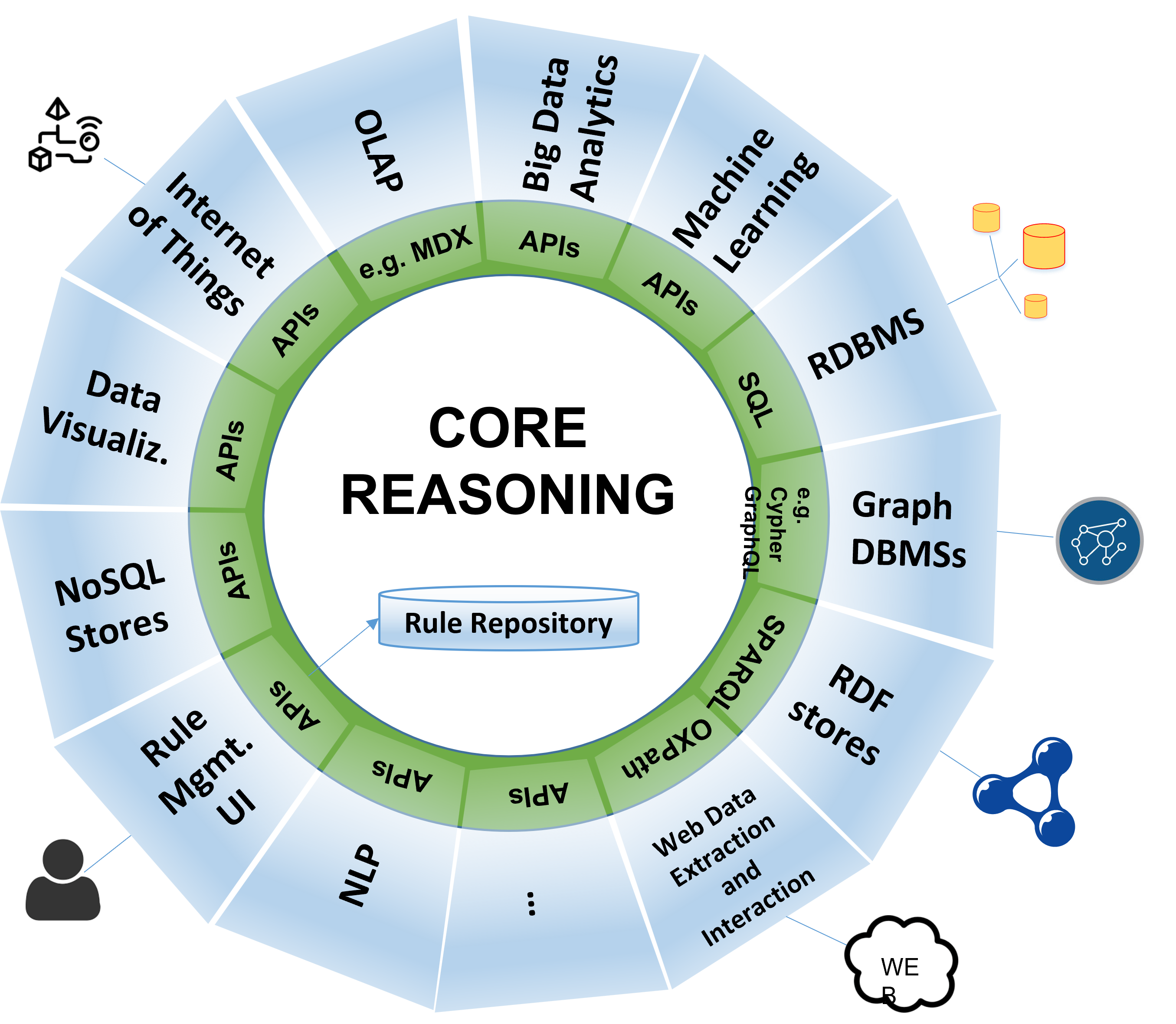
Knowledge Graphs are undergoing continuous developments that promise to enhance their capabilities and applications. Among the most prominent future trends is the integration of Knowledge Graphs with Large Language Models to improve language understanding and generate more accurate and contextual responses. Knowledge Graphs are also expected to play a larger role in Explainable AI, helping to understand how intelligent systems make their decisions. Furthermore, Knowledge Graphs will see an expansion in their applications across multiple domains such as healthcare and finance, with a focus on automation and continuous improvement of their construction and maintenance processes. Source: DeepLearning.AI


البيت | ايموني
https://www.aymany.com/

