The Silk Road: How Ancient Trade Routes Shaped the Modern World
The Enduring Legacy of the Silk Road: An Ancient Bridge Connecting East and West
Discover the Ancient Silk Road: A Historic Trade Network
For over two millennia, the Silk Road was not merely a single path but a vast and dynamic network of ancient trade routes, stretching over 4,000 miles to connect East Asia with the Mediterranean. While famously named for its most prized commodity, silk, this extensive network facilitated much more than just commercial exchange. It served as a vital conduit for the flow of innovative ideas, advanced technologies, diverse religions, and rich cultures, profoundly shaping the civilizations it touched. This article delves into the Silk Road's origins, its immense economic and cultural impact, the factors contributing to its decline, and its enduring influence on global history, including its modern resurgence through initiatives like China’s Belt and Road Initiative.


Unraveling the Origins and Development of the Ancient Silk Road
The foundations of the Silk Road were established during the Han Dynasty (206 BCE–220 CE). Emperor Wu initiated its development by dispatching the diplomat Zhang Qian on a crucial mission to form alliances with Western tribes against the Xiongnu nomads. Although his diplomatic endeavors achieved only partial success, Zhang Qian’s detailed accounts of the regions beyond China—including the Fergana Valley (modern-day Uzbekistan) and the powerful Parthian Empire—ignited Chinese interest in facilitating long-distance trade. By the 1st century BCE, camel caravans were regularly traversing the Hexi Corridor, a critical passage through the Gobi Desert, effectively linking China to Central Asia and opening up these ancient trade routes.

These historical trade routes were never static; they consistently evolved in response to political shifts, environmental changes, and the rise and fall of great empires. Key branches of the Silk Road included:
- The Northern Route, which passed through the Tarim Basin and connected to the Kushan Empire (1st–3rd centuries CE), a significant facilitator of trade among China, India, and Rome.
- The Southern Route, which traversed the majestic Himalayas and linked China to India and Southeast Asia.
- The Maritime Silk Road, which complemented the overland trade by connecting Chinese ports to Persia, Arabia, and East Africa across the Indian Ocean.

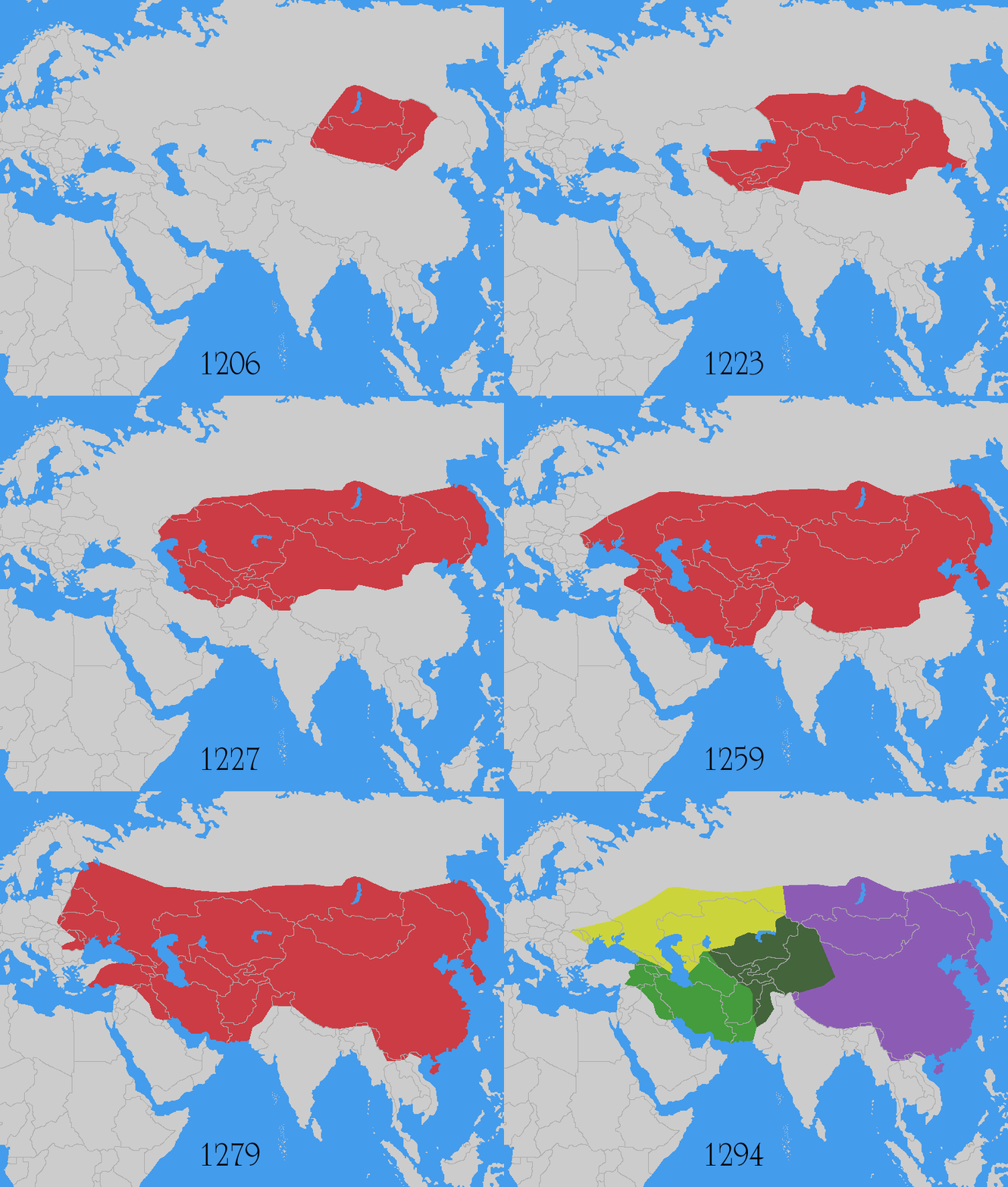
The Pax Mongolica (13th–14th centuries), established under the vast Mongol Empire, heralded the Silk Road’s golden age. This period ensured safe passage for renowned merchants like Marco Polo, fostering unprecedented levels of cultural and economic exchange across Eurasia.
Beyond Silk: A Vast Exchange of Goods and Technologies on the Silk Road
While silk remained the most iconic export from China, the Silk Road facilitated the transportation of a vast and diverse array of goods, enriching economies across continents:
- From China: Exquisite porcelain, paper (invented in the 2nd century BCE), gunpowder, tea, and precious jade.
- From Central Asia: Indispensable Bactrian camels (essential for desert travel), highly prized horses by Chinese armies, luxurious carpets, and vibrant lapis lazuli.
- From India: Aromatic spices (pepper, cinnamon, cardamom), fine cotton textiles, rich indigo dye, and potent medicinal herbs.
- From the West (Rome, Persia, Byzantium): Elegant glassware, high-quality wool, gold, silver, grapes, alfalfa, and olive oil.
Beyond mere material goods, the Silk Road served as a profound highway for technological diffusion, leading to global advancements:
- The art of papermaking spread from China to the Islamic world and eventually to Europe, revolutionizing record-keeping and scholarship.
- Gunpowder, a Chinese invention, made its way to the Middle East and Europe, fundamentally transforming warfare.
- Advanced irrigation techniques and new crop varieties (such as citrus fruits, sugar, and rice) dramatically altered agricultural practices across Eurasia.
Cultural and Religious Exchange: The Silk Road as a Conduit for Ideas
Perhaps the most enduring legacy of the Silk Road is its pivotal role in spreading religions and philosophies across vast distances:
- Buddhism, originating in India, journeyed eastward along the Silk Road, reaching China by the 1st century CE and subsequently influencing Korea and Japan. Iconic cave temples like Dunhuang and monasteries in Turfan emerged as vibrant centers of learning and art.

- Islam expanded eastward after the 7th century, gaining significant influence in Central Asia, Persia, and China (particularly during the Tang Dynasty).
- Other religions such as Manichaeism, Nestorian Christianity, and Zoroastrianism also found followers along these trade routes, creating a remarkable religious melting pot in vibrant cities like Samarkand and Kashgar.
- Meanwhile, Confucianism and Daoism spread westward, while Greek and Persian artistic styles profoundly influenced Buddhist and Chinese art, giving rise to fascinating syncretic forms like Gandhara sculpture.
The Silk Road also greatly fostered scientific and intellectual exchange:
- Advanced mathematics and astronomy from India and Persia reached China and the Islamic world, driving innovation.
- Vital medical knowledge, including Ayurveda and Greek humoral theory, spread across continents, improving public health.
- Important literary works, such as Persian poetry and Chinese classics, were translated and shared, enriching global intellectual traditions.
Decline of the Silk Road: Shifting Trade Routes and Political Upheaval
By the 15th century, the Silk Road’s preeminence as the primary trade network gradually diminished due to several significant factors:
- 1. The Rise of Maritime Trade – European explorers, including Vasco da Gama, pioneered and established efficient sea routes to Asia, effectively bypassing the slower and more dangerous overland trade. The Portuguese, Dutch, and later British empires gained control over these maritime routes, making them significantly more efficient and profitable for global commerce.
- 2. Political Fragmentation – The collapse of the mighty Mongol Empire ushered in a period of profound instability across Central Asia. The emergence of numerous warlords and petty kingdoms severely disrupted the once-safe flow of trade along the Silk Road.
- 3. Ottoman Control – The Ottoman Empire’s conquest of Constantinople in 1453 and its subsequent dominance over key land routes led to increased tariffs and restricted access, making overland trade prohibitively costly for European merchants.
- 4. The Black Death (14th century) – The devastating plague spread along the Silk Road, decimating populations across Eurasia and causing widespread disruption to trade and economic activity.

The Silk Road's Lasting Legacy and its Modern Revival: The Belt and Road Initiative
Despite its historical decline, the profound influence of the Silk Road continues to resonate today:
- Cultural Hybridity: The remarkable fusion of artistic, architectural, and culinary traditions (e.g., Persian miniatures influencing Chinese art, the concept of noodles reaching Italy) vividly reflects its enduring cross-cultural impact.
- Globalization’s Precursor: The Silk Road established early patterns of economic interdependence, laying the groundwork for modern globalization.
- Archaeological Discoveries: Significant sites like the awe-inspiring Terracotta Army, the Mogao Caves, and the ancient ruins of Palmyra provide tangible and invaluable evidence of its vast historical significance and cultural depth.
In the 21st century, China's ambitious Belt and Road Initiative (BRI, launched in 2013) aims to revive the spirit of the ancient Silk Road through massive infrastructure projects including new rails, ports, and pipelines that seek to connect Asia, Europe, and Africa. While the BRI has encountered criticism regarding debt diplomacy and geopolitical concerns, it undeniably underscores the Silk Road’s continued relevance as a powerful symbol of economic cooperation and profound cross-cultural connection in our interconnected world.


Conclusion: The Enduring Impact of the Ancient Silk Road
The Silk Road was far more than an ancient trade network—it was a powerful catalyst for global civilization, fostering the exchange of invaluable goods, transformative ideas, and groundbreaking innovations that collectively shaped the modern world we know today. From the widespread dissemination of religions and advanced technologies to the rich intermingling of artistic and intellectual traditions, its profound legacy endures in the highly interconnected global society we inhabit. As contemporary initiatives like the Belt and Road Initiative clearly demonstrate, the Silk Road remains a potent and inspiring metaphor for human collaboration and interconnectedness across borders, serving as a timeless reminder that progress has always depended on mutual exchange, successful adaptation, and profound understanding among diverse peoples and cultures.


البيت | ايموني
https://www.aymany.com/


